In today’s hyper-aware business landscape, the physical appearance of your facility is only half of the equation. A lobby with gleaming floors and dust-free desks may look immaculate, but looks can be deceiving. The invisible threats—viruses, bacteria, and pathogens that linger on surfaces for days—pose a continuous risk to the health of your employees, the confidence of your clients, and the overall continuity of your business operations. The standard mop-and-bucket routine of the past is no longer sufficient to protect a modern workspace. To ensure a truly safe environment, business owners and facility managers must elevate their maintenance strategies by investing in professional commercial disinfectant cleaning services.
By partnering with industry experts who utilize advanced sanitization technologies and hospital-grade solutions, you transform your commercial space from merely “visibly clean” to clinically safe. In this comprehensive guide, we will explore the critical distinctions in modern hygiene practices, the cutting-edge technologies driving the industry, and the profound return on investment that a comprehensive disinfection protocol provides for your organization.
1. The Critical Difference Between Cleaning, Sanitizing, and Disinfecting
To build an effective facility maintenance plan, you must first understand the terminology. Many business owners use the terms “cleaning,” “sanitizing,” and “disinfecting” interchangeably, but in the professional commercial cleaning industry—and according to the Centers for Disease Control and Prevention (CDC)—they represent entirely different processes with distinct outcomes.
The Limitations of Traditional Cleaning
Cleaning is the foundational first step of any maintenance routine. It involves using soap, water, and physical friction to remove visible dirt, dust, grime, and organic matter from a surface. While cleaning is essential for aesthetics and does physically remove some germs, it does not reliably kill them. If a janitorial staff only wipes down a conference room table with a standard all-purpose cleaner, the surface may look flawless, but microscopic pathogens left behind by a coughing employee will continue to thrive and multiply.
Why Disinfection is the Ultimate Standard
To truly neutralize biological threats, you must move beyond the surface layer.
- Sanitizing: This process reduces the number of bacteria on a surface to a level considered safe by public health standards. However, sanitizers are generally not designed to eradicate highly resilient viruses.
- Disinfecting: This is the highest standard of surface safety. Disinfection utilizes specialized chemicals to completely destroy or irreversibly inactivate both bacteria and viruses (including influenza, norovirus, and coronaviruses) on hard, non-porous surfaces. Professional commercial disinfection teams always clean a surface first to remove the organic barrier, and then apply a targeted disinfectant to eliminate the remaining microscopic threats, ensuring absolute safety.
2. Advanced Technologies Used by Disinfection Experts
The tools used in commercial disinfection have evolved dramatically. Relying on spray bottles and cotton rags is inefficient, prone to cross-contamination, and often fails to reach the hidden crevices where pathogens hide. Top-tier professional services deploy state-of-the-art technology to ensure comprehensive coverage.
Electrostatic Sprayer Technology
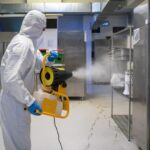
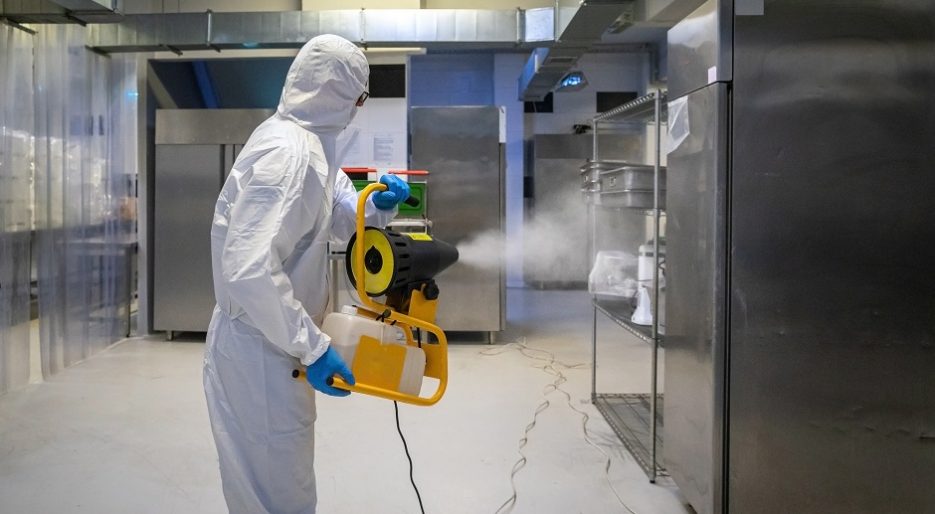
The most significant advancement in the commercial sanitization industry is the deployment of electrostatic sprayers. This sophisticated equipment is an absolute game-changer for large-scale facilities. As the liquid disinfectant leaves the sprayer nozzle, it is infused with a positive electrical charge. Because most surfaces and objects in a room hold a neutral or negative charge, the positively charged disinfectant droplets are drawn to them like a magnet.
The result is a phenomenon known as “electrostatic wrapping.” The chemical does not just land on the top of a desk or chair; it aggressively wraps around the sides, underneath the armrests, and into deep crevices, coating the entire object uniformly. This ensures 100% coverage of complex surfaces—such as keyboards, gym equipment, and medical machinery—without over-saturating the area or leaving harmful chemical pools behind.
Hospital-Grade, EPA-Approved Solutions
Technology is only as effective as the chemistry behind it. Reputable commercial disinfection services do not use off-the-shelf bleach or harsh, lung-irritating retail chemicals. Instead, they strictly utilize EPA-registered, hospital-grade disinfectants.
Industry experts refer to the EPA’s “List N”—a registry of products specifically proven to be effective against the toughest pathogens, including SARS-CoV-2, influenza, and antibiotic-resistant bacteria like MRSA. Furthermore, modern professional disinfectants are formulated to be tough on germs but gentle on your facility. They are non-corrosive to sensitive electronics, leave no sticky residue, and dissipate quickly to maintain healthy indoor air quality.
3. Key Areas in Your Facility That Require Immediate Attention
Pathogens do not spread evenly throughout a building; they cluster in specific zones based on human behavior and foot traffic. A strategic disinfection plan prioritizes these vulnerable areas to break the chain of infection.
High-Touch Points and Communal Zones
The primary vectors for illness in any commercial building are “high-touch points”—surfaces that are interacted with by dozens, if not hundreds, of different people throughout the day. A professional team maps out your facility to target these exact vectors.
- Entryways and Elevators: Door handles, push plates, elevator call buttons, and reception counters.
- Breakrooms and Kitchens: Refrigerator handles, microwave keypads, coffee machine buttons, and communal dining tables.
- Restrooms: Faucet handles, soap dispensers, stall latches, and flush valves. Routine electrostatic disinfection of these communal zones drastically reduces the risk of an localized outbreak sweeping through your workforce.
Industry-Specific Vulnerabilities
A trusted commercial cleaning partner understands that a corporate office requires a different disinfection strategy than an outpatient clinic or a manufacturing plant.
- Corporate Offices: The focus is on shared conference rooms, hot-desking stations, and sensitive IT equipment.
- Medical and Dental Clinics: These environments demand strict adherence to OSHA and HIPAA regulations, requiring terminal cleaning protocols, bloodborne pathogen remediation, and rigorous sanitization of waiting room furniture.
- Fitness Centers and Retail: High-sweat environments and heavy public foot traffic necessitate daily, deep-penetrating disinfection of weights, cardio machines, dressing rooms, and point-of-sale terminals to protect public health.
4. The Measurable ROI of a Professionally Disinfected Workspace
Investing in routine commercial disinfection is often viewed as an operational expense, but forward-thinking leaders recognize it as a strategic investment with a highly measurable Return on Investment (ROI).
Reducing Employee Absenteeism
The most immediate financial benefit of a sanitized workspace is the reduction in sick days. When a seasonal flu or a stomach bug moves through an office, it cripples productivity, delays project timelines, and forces healthy employees to take on exhausting double workloads. By proactively neutralizing these pathogens before they can spread, you safeguard your human capital. Employees who work in a demonstrably clean environment take fewer sick days, experience less chronic fatigue, and maintain higher levels of daily output.
Protecting Your Brand Reputation and Client Trust
In the modern market, consumer trust is heavily tied to facility hygiene. If a prospective client or a retail customer walks into your establishment and notices sticky surfaces, dusty corners, or unpleasant odors, they will immediately question your professionalism and attention to detail. Conversely, a facility that smells fresh, looks immaculate, and actively promotes its professional disinfection protocols projects an image of uncompromising quality and care. Protecting your patrons’ health is one of the most powerful ways to build lasting brand loyalty and secure repeat business.
5. How to Choose the Right Disinfection Partner
Entrusting an outside vendor with the biological safety of your building is a major decision. The commercial cleaning industry has seen a massive influx of new companies, making it vital to know how to separate the true experts from the amateurs.
Certifications, Training, and Compliance
Do not hesitate to ask a prospective cleaning partner about their credentials. A reputable firm will invest heavily in the ongoing education of its staff. Look for companies whose technicians are rigorously trained in cross-contamination prevention, the proper donning and doffing of Personal Protective Equipment (PPE), and the precise dwell times required for different chemical disinfectants to reach maximum efficacy. Furthermore, ensure the company is fully bonded and insured, protecting your business from any liability.
Customized Protocols for Your Unique Space
Avoid companies that offer a rigid, “one-size-fits-all” pricing structure over the phone. A genuine industry expert will insist on conducting a thorough, on-site walkthrough of your facility before drafting a proposal. They will listen to your specific operational concerns, analyze your foot traffic patterns, and assess your flooring and surface materials. Based on this data, they will present a customized disinfection schedule—whether that requires a nightly electrostatic spray down, weekly deep-cleaning interventions, or specialized daytime porter services to continuously sanitize high-touch areas during peak business hours.
Conclusion
The standard for what constitutes a “clean” commercial environment has fundamentally shifted. The health of your facility directly impacts the health of your employees, the satisfaction of your customers, and the financial stability of your organization. Relying on outdated cleaning methods leaves your business vulnerable to invisible threats that can disrupt your operations overnight.
By embracing modern technology, hospital-grade solutions, and the expertise of professional disinfection teams, you create a fortress of health and productivity. You provide your staff with the peace of mind they need to perform at their best, and you show your clients that their safety is your absolute highest priority.
READ ALSO: 5 Signs Termite Damage Is Worse Than You Think (And Spreading Fast)